
Epoxy Flooring Dubai & Abu Dhabi for Homes and Commercial Spaces
Looking for epoxy flooring in Dubai or Abu Dhabi? We supply and install resin-based flooring for selected homes, garages, showrooms, warehouses and other commercial spaces. Backed by over 15 years of flooring experience, our team helps match the system and finish to the existing substrate, expected traffic, moisture exposure and maintenance needs. Explore our flooring solutions, commercial flooring and resin flooring options, then share your location and floor area to discuss the right next step for your project.
- 15+ Years of Flooring Experience
- Residential and Commercial Applications
- Decorative Flake and Metallic Finish Options
- Substrate Assessment Before Installation
- Surface Preparation and Quality Checks
- System Selection by Traffic and Use
- Project Enquiries Across the UAE
Years of Expertise
0
+
Expert craftsmanship, durability, elegance—Flooring perfected over 15+ years.
500+ Google Reviews
0
☆
Happy Customers
0
K+
Trusted by 15K happy customers—quality Flooring, lasting satisfaction guaranteed.
Money Back Guarantee
0
Days
Risk-free purchase with 30-day money-back guarantee—no questions asked.
Get Up to 30% Discount on Premium Epoxy Flooring – Limited Time Offer

Take advantage of our exclusive Sale Offers and enjoy up to 30% discount on top-quality epoxy flooring. This is your chance to buy the best epoxy flooring at unbeatable prices. Our powerful discounts make upgrading your floors easier and more affordable than ever. Don’t miss out—shop now and save big with durable, seamless flooring built for performance and style. Act fast—these deals won’t last.
Book Now & Create Your Dream Space!
Epoxy Flooring Dubai: Material Selection and Quality Control
Choosing an epoxy or broader resin flooring system starts with the intended use, substrate condition, expected traffic, moisture, chemical exposure and preferred finish. As epoxy flooring suppliers in UAE, we review the product technical data for adhesion, abrasion and chemical resistance, curing conditions, and any stated fire or emissions classifications. Not every resin system provides the same performance, so the product specification should match the space rather than relying on a general label.
For commercial projects, compare our commercial flooring solutions with epoxy systems according to traffic and maintenance needs; epoxy painting services may suit coating-focused requirements. Before application, assess substrate moisture and surface profile. During installation, follow the manufacturer’s resin-to-hardener ratio and record coverage, coating thickness and curing conditions.
Residential and Commercial Epoxy Flooring Solutions in the UAE
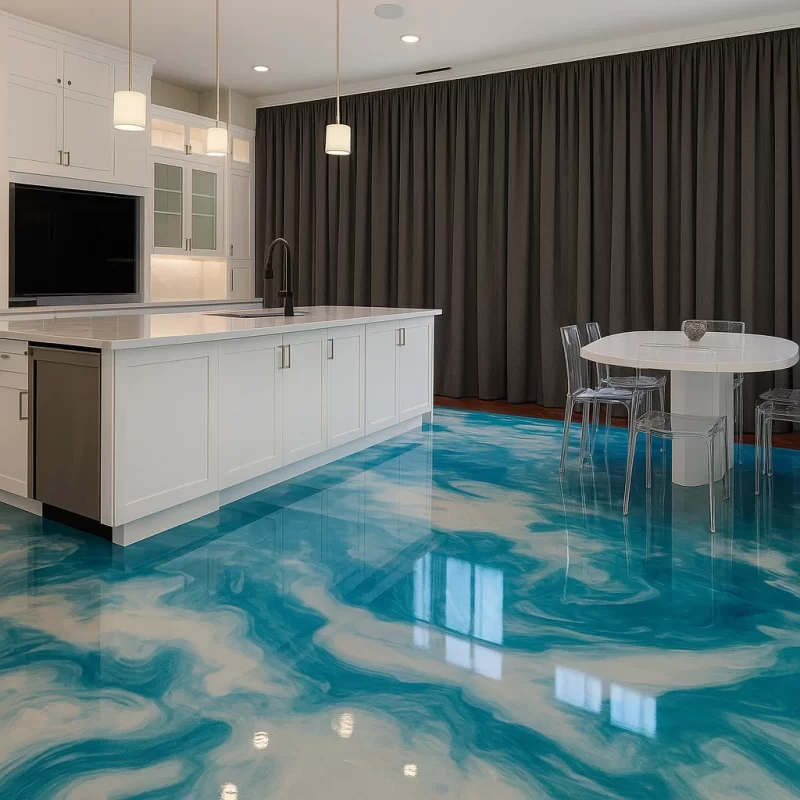
Residential Epoxy Flooring
Residential epoxy flooring can suit selected garages, a basement floor, kitchens and utility rooms where a continuous, easy-to-clean finish is preferred. Suitability depends on the substrate, moisture conditions, room use and selected coating. In kitchens and other areas that may become wet, specify an appropriate textured finish and confirm its slip-performance data; a smooth glossy surface should not automatically be treated as slip-resistant.
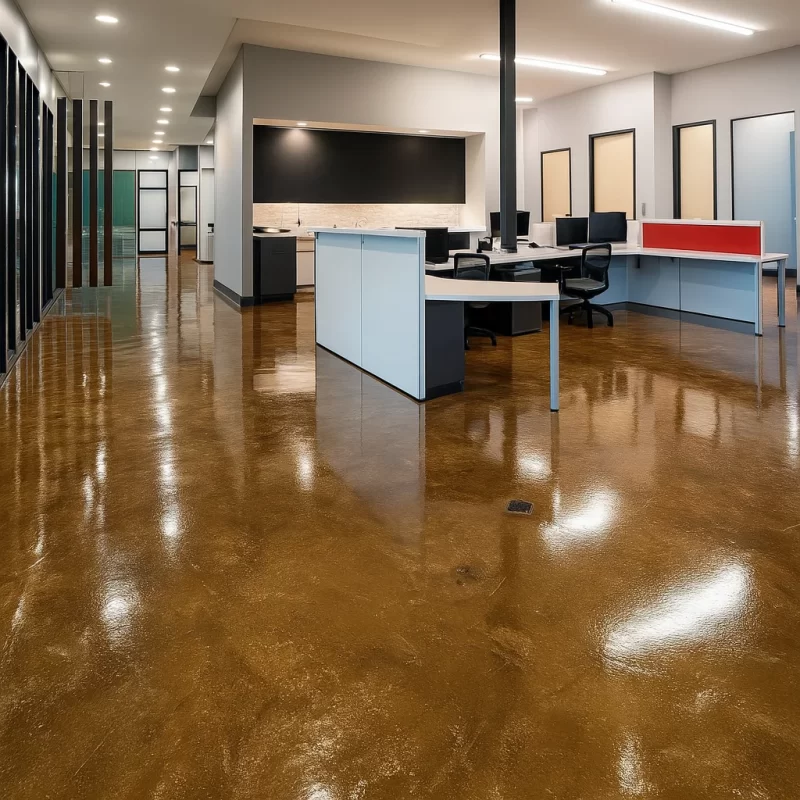
Commercial Epoxy Flooring
Commercial epoxy flooring in the UAE may be suitable for warehouses, showrooms, retail units, workshops and service areas. The system should be matched to foot or vehicle traffic, impact, chemical exposure, cleaning methods and the downtime available for curing. Areas with heavy equipment or aggressive chemicals may need a different coating build from a standard decorative floor, so confirm the operating conditions before selecting the product.
Epoxy Flooring Types for Different Spaces

Epoxy Flake Flooring
Epoxy flake flooring broadcasts decorative chips into the resin and seals them with a compatible topcoat. The final appearance and texture depend on flake size, coverage and topcoat selection. Where grip matters, specify the required texture for the actual wet or dry conditions and confirm the product’s performance data.
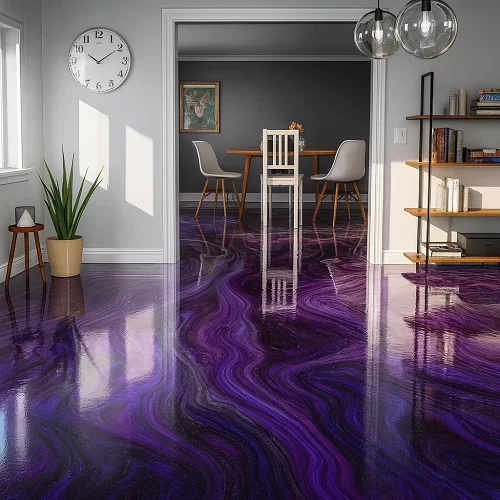
Metallic Epoxy Flooring
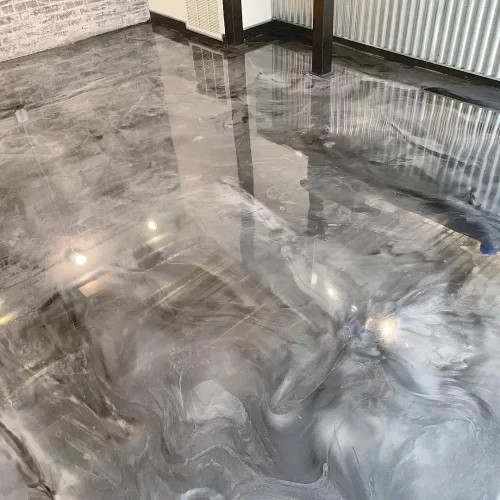
A metallic epoxy floor uses metallic pigments to create flowing or marbled patterns. Approve a sample before installation because lighting, substrate preparation and application technique can affect the final pattern and gloss.
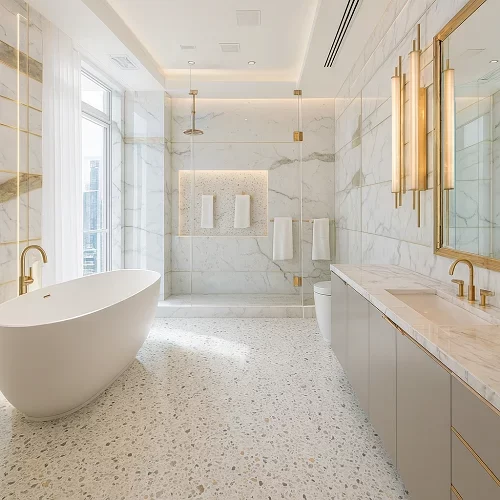
Epoxy Terrazzo Flooring
Epoxy terrazzo combines a resin binder with selected decorative aggregates, which are ground and polished to expose the chosen chips. Aggregate size, colour, divider layout and polishing determine the final appearance and maintenance requirements. It can suit selected commercial interiors where a decorative, continuous finish is required.
Mortar Epoxy Flooring
Mortar epoxy combines resin with graded fillers to create a thicker, trowel-applied system for demanding service areas. Its specification should reflect traffic, impact, substrate condition and chemical exposure rather than the product name alone. A site assessment helps determine whether this build-up is appropriate.
Epoxy Finishes Compared: Which System Fits Your Space?
These common epoxy finishes differ in appearance, build and typical use. The right option depends on the floor condition and the demands of the space.
| Finish | Appearance | Potential application | What to confirm |
|---|---|---|---|
| Flake epoxy | Decorative chips sealed into resin | Garages, utility areas and selected commercial floors | Flake coverage and the texture of the topcoat |
| Metallic epoxy | Flowing or marbled pigment effects | Decorative residential and commercial interiors | Approve a sample under the site’s lighting |
| Epoxy terrazzo | Resin binder with exposed decorative aggregates | Selected retail and public interiors | Aggregate size, divider layout and polishing |
| Mortar epoxy | Thicker, filled and trowel-applied build | Workshops and demanding service areas | Traffic, impact, chemical exposure and substrate condition |
Epoxy Flooring Benefits and Practical Limitations
Epoxy can provide a continuous finish with fewer joints across the coated area and a choice of colours, decorative flakes, textures, or metallic epoxy flooring designs. A suitable system can be selected for the expected wear or chemical exposure, but the result depends on surface preparation, coating build and maintenance.Check the product specification and intended use before treating any finish as waterproof, fire-rated or slip-resistant.
Epoxy Flooring vs Tiles: Which Is Right for Your Space?
Epoxy flooring and tiles can both work well, but they differ in joints, preparation and repair. The better choice depends on the existing base, the finish required and how the room will be used.
| Comparison | Epoxy flooring | Tile flooring |
|---|---|---|
| Joints and appearance | Can create a continuous finish across the coated area | Usually has grout joints and separate tile units |
| Subfloor requirements | Needs a sound, clean and suitably prepared substrate with moisture assessed | Needs a stable base and compatible adhesive and grout |
| Cleaning | No grout joints across the coated field; use an approved cleaner | Grout lines may need separate cleaning and periodic attention |
| Repair | A local repair or recoat may be possible, but blending can remain visible | Individual tiles may be replaceable if a matching tile is available |
| Slip performance | Depends on resin, texture, topcoat and wet conditions | Depends on the tile’s surface rating and installation |
Disadvantages of Epoxy Flooring to Consider Before Installation
Before choosing epoxy flooring, consider the practical limitations as well as the finish:
- Preparation is critical: dust, oil, weak concrete, cracks or unsuitable moisture conditions can affect adhesion and may require additional work, or a specialized system like flex epoxy flooring to accommodate minor substrate movement.
- Curing affects access: the floor must remain unused for the product’s specified curing period, which can affect homes and operating businesses.
- Wet grip depends on texture: a smooth glossy coating can become slippery when wet; specify a suitable textured system where required.
- Repairs may show: a local patch can differ in colour or gloss from the surrounding floor, especially after ageing or sunlight exposure.
- Product choice matters: some epoxy systems may need a suitable UV-stable topcoat or other protection for the conditions of the space.
These points do not rule out epoxy; they help define the right system and set realistic expectations before installation.
Epoxy Flooring Cost in Dubai and Abu Dhabi: What Affects the Price?
The epoxy flooring cost and epoxy flooring price in Dubai depend on the area and work needed to prepare and coat the floor. When comparing an epoxy flooring price in the UAE, check that each quotation covers the same preparation, resin system, coating build and finish. A reliable quote requires project details and, where needed, a site assessment; we have not added a generic price per square metre.
| Cost factor | What is assessed | Why it matters |
|---|---|---|
| Floor area and layout | Total area, room shape, edges and separate work zones | Affects material quantities and labour time |
| Existing substrate | Cracks, contamination, moisture, weak concrete and old coatings | Grinding, repairs or removal may add preparation work |
| System and coating build | Primer, resin type, number of coats, thickness and topcoat | Different systems require different materials and application steps |
| Finish and performance | Flake, metallic, terrazzo or mortar; texture and exposure needs | Decorative or specialist requirements can change the specification |
| Access and schedule | Site access, equipment relocation, working hours and curing downtime | Restricted access or phased work can affect scheduling |
Share the location, floor area, existing surface and intended use to request a project-specific quotation.
Epoxy Flooring Preparation Process – Step by Step

Surface Cleaning
Remove dust, oil, grease, curing compounds and loose material before mechanical preparation.

Concrete Grinding
Grind the concrete to remove weak surface layers and create a profile suited to the selected epoxy system.

Crack and Hole Repair
Repair suitable cracks and surface defects; investigate active movement or moisture before coating.

Primer Application
Apply a compatible primer at the specified coverage and allow the required cure before the next layer.
Professional Epoxy Flooring Installation in Dubai and Abu Dhabi
After the substrate has been assessed and prepared, a professional flooring installation Dubai team applies a primer compatible with the floor and selected resin system. Resin and hardener are mixed in the manufacturer’s specified ratio, then each coat is placed within the required coverage and recoat window. Substrate and ambient temperature, moisture and ventilation can affect application and curing, so the work sequence must follow the product data sheet. For demanding settings, industrial epoxy flooring may need a different build-up from a residential system. Decorative work such as metallic epoxy flooring also depends on consistent preparation and controlled application. Before reopening the area, inspect coverage, edges, pinholes, texture and finish consistency.
Why Choose Our Epoxy Flooring Service?
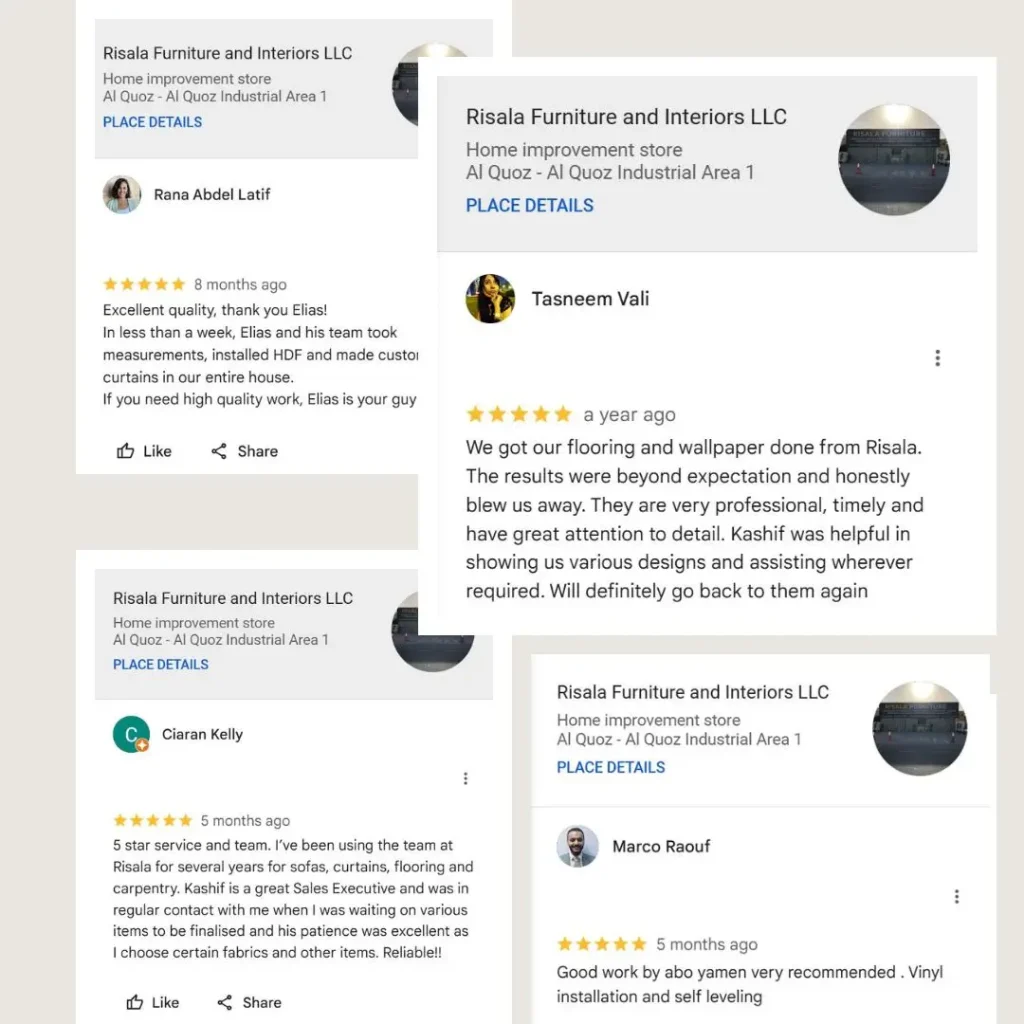
At Risala Furniture and Interiors LLC, we bring over 15 years of experience in flooring and interior projects. Our team discusses the intended use and preferred finish, coordinates surface preparation and floor installation, and plans the work around site conditions. For an epoxy project, ask for the proposed system, preparation method, coating build, curing schedule and maintenance instructions so the quotation can be compared on a like-for-like basis.
- 15+ Years of Flooring Experience
- Residential and Commercial Applications
- Decorative Flake and Metallic Finish Options
- Substrate Assessment Before Installation
- Surface Preparation and Quality Checks
- System Selection by Traffic and Use
- Project Enquiries Across the UAE
How Is Epoxy Flooring Maintained, and Can It Be Removed?
Routine care starts with removing loose grit, then cleaning with a soft mop and a product approved for the selected coating. Avoid abrasive pads or aggressive chemicals unless the manufacturer confirms they are suitable. Inspect high-wear areas, edges and impact points periodically. If the coating becomes chipped, stained or detached, identify the cause before repairing it; moisture, weak substrate material or poor adhesion may need attention as well as the visible damage. A local repair can differ in colour or gloss from the surrounding floor.
When an epoxy coating needs to be removed, mechanical grinding or another controlled removal method may be required. The right approach depends on coating thickness, substrate condition and the size of the area; an assessment helps avoid unnecessary damage to the concrete. For vehicle areas, see our epoxy garage flooring service.
What to Ask an Epoxy Flooring Installer Before You Book
Before booking an installer, ask for clear answers to these points:
- Which primer, resin system and topcoat are included in the quotation?
- How will the team assess moisture, cracks, old coatings and surface preparation?
- What coating build and finish are specified, including any textured surface requirement?
- How long must the area remain closed during application and curing?
- Will you receive the product data sheets, maintenance guidance and a written scope of work?
Epoxy Flooring Services Across Dubai, Abu Dhabi and the UAE
We handle enquiries for epoxy flooring in Dubai and epoxy flooring in Abu Dhabi, as well as projects in Sharjah, Ajman, Umm Al Quwain, Ras Al Khaimah, Fujairah and Al Ain, subject to project scope and scheduling. Our epoxy flooring solutions in the UAE are selected according to the location, floor area, existing surface and intended use. For coating-focused requirements, review our epoxy floor coating service and share the project details to discuss the next step.
FAQs About Epoxy Flooring in Dubai and Abu Dhabi
A: The schedule depends on the floor area, substrate repairs, number of coats, selected product and required curing time. Preparation, application and full cure are separate stages, and the area may need to remain closed between them. A project schedule should be confirmed after the site and product requirements are reviewed.
A: It may be possible when the existing tiles are firmly bonded, stable and suitable for mechanical preparation. Loose or hollow tiles, grout lines, contamination, moisture and finished floor height must be assessed first. Some floors need tile removal rather than coating over the existing surface.
A: A suitable epoxy system can be considered for a residential kitchen when the substrate is sound and properly prepared. The finish should be selected for the room's cleaning and moisture conditions; where water may reach the floor, discuss a suitable texture and confirm its slip-performance data.
A: A smooth glossy epoxy surface can become slippery when wet. Textured finishes or suitable aggregates can be specified where more grip is needed, but the correct option depends on the room, footwear, water exposure and cleaning routine. Confirm the performance data for the selected system.
A: The main factors are floor area, substrate condition, grinding and repair work, resin system, coating thickness, finish, texture requirements, site access and curing downtime. A quotation should list the preparation and coating stages so different offers can be compared fairly.
A: Remove loose grit before mopping, use a soft mop and a cleaner approved for the selected coating, and avoid abrasive pads or aggressive chemicals unless the manufacturer permits them. Inspect high-wear areas periodically and assess chips or lifting before carrying out a repair.