Subfloor Preparation Errors That Cause Uneven Flooring
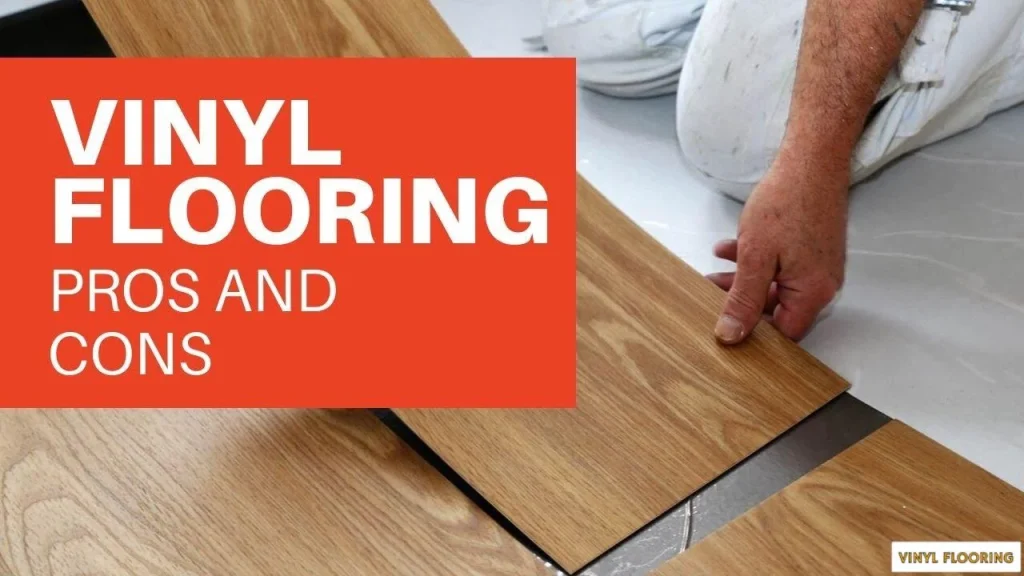
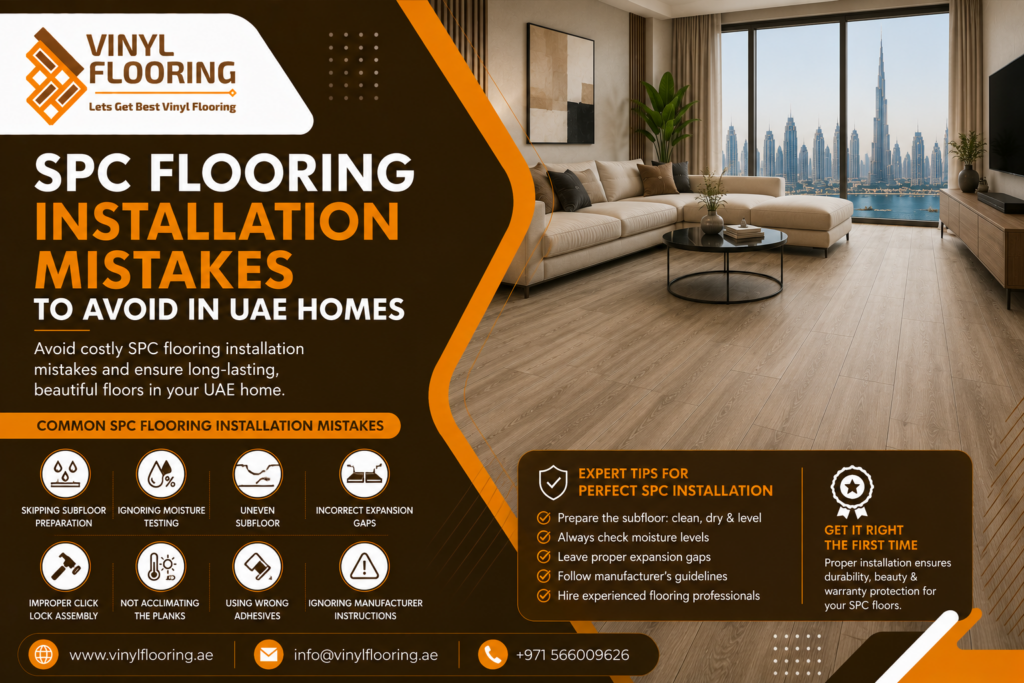
Subfloor preparation is one of the most critical stages in any flooring installation. Common errors include failing to level the surface, leaving debris or dust behind, and ignoring cracks or surface irregularities. Even small imperfections can telegraph through vinyl or SPC flooring, causing visible bumps or joint separation over time. In Dubai’s construction environment, concrete slabs must be properly checked for flatness before installation to ensure long-term performance and a smooth finished appearance.
Expansion Gap Problems in Dubai Temperatures
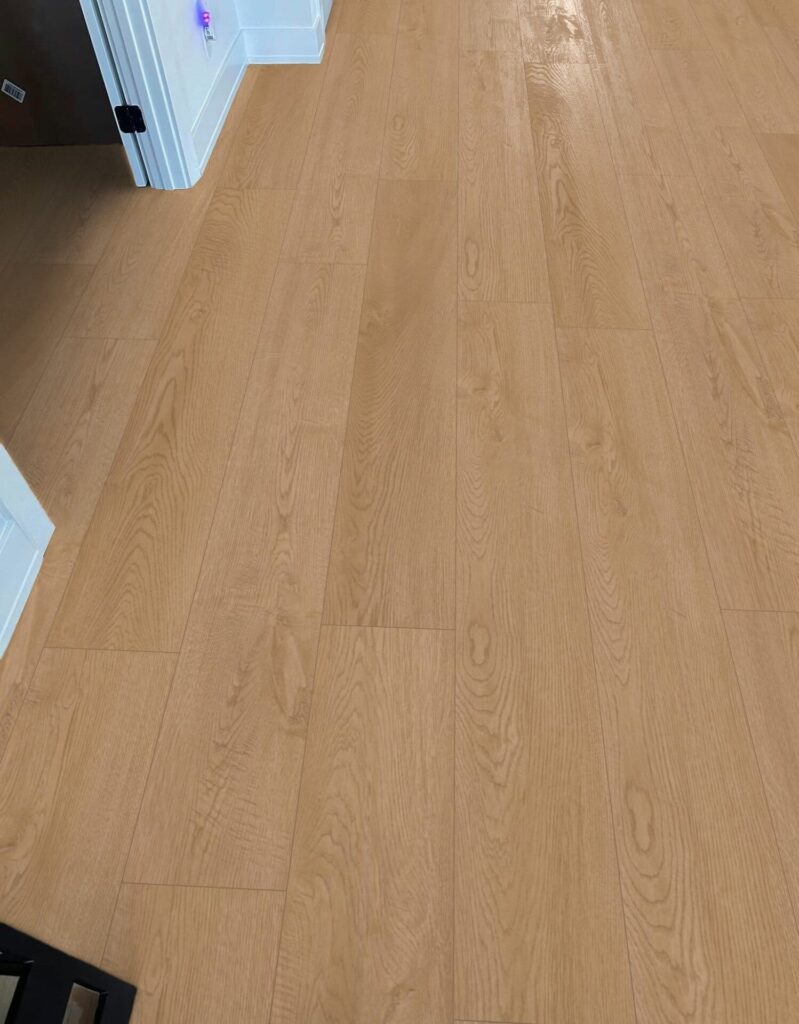
Dubai’s high temperatures and strong indoor cooling create constant thermal movement in flooring systems. If expansion gaps are too small—or completely missing—flooring may buckle, lift at the edges, or develop pressure points. On the other hand, overly large gaps can lead to visible perimeter lines. Properly sized expansion gaps around walls, columns, and fixed cabinetry are essential to allow natural movement without compromising aesthetics or structural integrity.
Moisture Barrier Mistakes Under Vinyl Flooring
A poorly installed or missing moisture barrier is a major cause of flooring failure, especially over concrete slabs. Without proper vapor protection, moisture can migrate upward and affect adhesives, underlayments, or even cause mold growth beneath flooring. In humid environments, selecting the correct barrier type and ensuring full coverage without gaps or overlaps is essential for protecting the entire flooring system.
Incorrect Underlay Choices for Apartment Installations
Underlayment selection must match both the flooring type and building conditions. Using overly soft underlay beneath rigid SPC flooring can lead to joint stress and movement issues. Conversely, using no acoustic underlay in apartments may result in excessive noise transfer. The correct underlay should balance sound reduction, comfort, and structural stability while complying with building requirements in high-rise environments.
Furniture Placement Immediately After Installation
Placing heavy furniture immediately after installation can stress new flooring joints before they have fully stabilized. In some systems, especially glue-down applications, adhesives may still be curing. Improper loading during this period can cause indentation, shifting, or joint misalignment. It is generally recommended to wait until the flooring has fully settled before repositioning heavy items.
DIY Flooring Risks in Large Residential Spaces
DIY installation in large areas increases the risk of cumulative errors. Issues such as uneven alignment, poor expansion gap management, and inconsistent cutting can become more noticeable over wide spaces. In apartments and villas with open layouts, small mistakes can multiply visually across rooms. Professional installation ensures proper tools, techniques, and compliance with manufacturer specifications.
Improper Cleaning Methods After Installation
Using harsh chemicals or abrasive cleaning tools immediately after installation can damage the protective wear layer of vinyl flooring. Excess water, bleach-based cleaners, or steam mops may also affect adhesives or joints. It is important to follow manufacturer-recommended cleaning guidelines and allow any installation residues or settling periods to complete before deep cleaning.
Choosing the Wrong Wear Layer for Busy Homes
Wear layer thickness plays a major role in flooring durability. In busy households with children, pets, or high foot traffic, a thin wear layer may wear down quickly, leading to visible scratches and surface dullness. Commercial-grade or thicker wear layers are better suited for active environments, providing improved resistance to daily abrasion and extending the flooring’s usable life.
Installation Timing During Renovation Projects
Proper timing is essential when coordinating flooring installation with other renovation works. Installing flooring too early exposes it to dust, paint spills, and construction damage. Installing too late can delay other finishing tasks such as cabinetry or skirting. Ideally, flooring should be installed after major structural and messy works are complete but before final fixtures and furniture placement. This ensures optimal protection and a clean final result.

Frequently Asked Questions
Why does SPC flooring lift at the edges?
Poor expansion spacing may cause plank lifting over time.
Is subfloor leveling important for vinyl flooring?
Uneven subfloors can affect flooring stability and appearance.
Can moisture damage new SPC flooring?
Moisture issues may weaken flooring installation if ignored.
Should furniture be moved immediately after installation?
Waiting several hours helps stabilize newly installed flooring.
What underlay works best with SPC flooring?
Manufacturer-approved underlays provide proper support and insulation.
Is DIY SPC installation recommended?
Professional installation reduces long-term flooring issues significantly.
Can harsh cleaners damage vinyl flooring?
Strong chemicals may wear down protective floor coatings.
How long should flooring acclimate before installation?
Many installers acclimate flooring for at least 24 hours.
What wear layer suits busy homes best?
Thicker wear layers improve durability in high-traffic spaces.